Every few years, a technology comes along that doesn't just improve the status quo — it obliterates it and builds something new on the ashes. In 2026, that technology is Tripo 3D, and if you haven't heard of it yet, you're about to have your mind blown.
Here's the headline: Tripo AI just raised $50 million to power a new generation of 3D AI models that can generate production-ready, engine-compatible 3D assets in two seconds. Not two minutes. Two seconds. That's faster than you can read this sentence.
But speed alone isn't the story. What makes Tripo genuinely terrifying (in the best way) is the architectural breakthrough they've achieved. While every other AI 3D company is still using diffusion models that hallucinate geometry pixel-by-pixel, Tripo's new native 3D diffusion architecture — unveiled at GDC 2026 — represents what the industry is now calling AI 3D 2.0. It doesn't approximate 3D from 2D. It thinks directly in three-dimensional space.
⚡ TL;DR: Tripo 3D generates up to 2M polygon assets in 2 seconds. Has two flagship models (H3.1 for hero assets, P1.0 Smart Mesh for real-time). Raised $50M. Fully production-ready. This is the fastest AI 3D generator on the planet.
Who Is Tripo AI?
Tripo AI is a San Francisco-based artificial intelligence company building general-purpose 3D foundation models. They're not just another AI startup — they've assembled one of the most formidable research teams in the spatial computing space, backed by serious infrastructure and even more serious funding.
In March 2026, Tripo AI announced $50 million in new funding, signaling massive investor confidence in their approach. But unlike many AI companies that raise huge sums on promises alone, Tripo arrived at the table with a shipping product that already had thousands of developers building on it.
The company's platform combines proprietary AI models (the H series for high-fidelity, the P series for production-ready real-time assets, and the research-stage W1.0 world model) with ecosystem plugins for Unity, Unreal Engine, and Blender. The result is an end-to-end pipeline that takes you from prompt or image to engine-ready asset in seconds.
Their technology is deployed across intelligent manufacturing, virtual reality, interactive entertainment, and embodied AI. But for creators like us, the real action is in their two flagship models — H3.1 and P1.0.
The Secret Sauce: Native 3D Diffusion
To understand why Tripo is different, you have to understand the problem with every other AI 3D generator on the market today.
The old approach: Almost every AI 3D model (including Hunyuan, Stable 3D, Point-E) uses some variant of image diffusion adapted to 3D. They predict 2D renderings from multiple angles, then reconstruct a 3D mesh from those 2D projections. This works, but it's fundamentally limited — you're asking a 2D model to do a 3D job. The result is geometry that looks right from some angles and wrong from others, with baked-in artifacts from the 2D-to-3D conversion.
Tripo's breakthrough: Instead of predicting mesh elements one token at a time or converting from 2D projections, Tripo's system models geometry directly within a unified three-dimensional probabilistic space. Vertices, edges, and polygon faces are all represented within a shared spatial feature field. The model reasons about the entire shape simultaneously — preserving the inherent symmetry of 3D space instead of imposing linear sequence constraints.
🧠 How it works: Tripo's architecture represents every vertex, edge, and face as components of a unified probabilistic field. Instead of generating a mesh sequentially (vertex 1, vertex 2, face 1...), the system resolves all geometry simultaneously through parallel computation across the entire feature field. This is why Tripo assets don't have the topological chaos that plagues other AI 3D generators — the model sees the whole shape at once.
The practical result? Clean, production-ready topology from the first generation. No cleanup. No retopology. No decimation. The mesh comes out the other side ready to drop into Unity, Unreal, Blender, or your game engine of choice.
This architectural shift is why Tripo is calling it AI 3D 2.0 — not a marketing buzzword but a genuine generational leap in how AI understands and generates three-dimensional space.
Tripo H3.1: The Beast for Hero Assets
If you need maximum visual fidelity — assets that will be the centerpiece of a scene, a hero weapon in a game, a product visualization for a flagship item, or a cinematic close-up — H3.1 is your weapon.
H3.1 (released February 2026 as v3.1-20260211) is Tripo's high-fidelity flagship. Here's what it brings to the table:
Up to 2 Million Polygons
In Ultra Mode (geometry_quality = detailed), H3.1 generates assets with up to 2,000,000 polygons. That's enough geometric density to capture micro-details — skin pores, fabric weave, chiseled muscle definition, ornate jewelry filigree. These aren't "game-ready approximations." These are cinema-grade meshes that hold up under 8K renders and extreme close-ups.
Extreme Texture Quality
The June 2026 update (v1.9.7) introduced a new extreme texture quality tier that generates 4K PBR texture sets with physically-based materials. The model produces accurate roughness, metalness, normal, and ambient occlusion maps that respond correctly to dynamic lighting in any engine. The new tier costs 30 credits (vs 20 for detailed, 10 for standard), but the quality jump is immediately visible.
Sculpture-Level Geometry Precision
Tripo v3.0+ models deliver what the company calls "sculpture-level geometry precision" — sharp edges, clean surfaces, and structural coherence that rival hand-sculpted assets. Embedded text and complex surface patterns are rendered with unprecedented clarity for an AI 3D generator.
Production Benchmarks
| Spec | H3.1 |
| Max Polygons | 2,000,000 (Ultra Mode) |
| Standard Polygons | 1,500,000 |
| Texture Quality | Standard / Detailed / Extreme (4K PBR) |
| Generation Time | ~12 seconds |
| Best For | Hero assets, cinematic, 3D printing, marketing |
Tripo P1.0 Smart Mesh: The 2-Second Revolution
If H3.1 is the sculptor, P1.0 is the production line. This is where Tripo's architectural advantage becomes undeniable.
Smart Mesh (P1.0) was debuted at GDC 2026 and represents a fundamental rethinking of what AI-generated 3D assets should look like. Instead of dense, chaotic geometry that requires hours of cleanup, P1.0 outputs structured, clean topology that's designed for real-time engines from the ground up.
Clean Topology in 2 Seconds
This is the stat that stops developers in their tracks. Two seconds from prompt to production-ready, low-poly mesh. Not "two seconds to generate a messy mesh that takes 30 minutes to fix." Two seconds to generate a mesh with organized edge flow, clean quads, and predictable polygon structure.
To put that in perspective: a professional 3D artist takes 30-60 minutes to create a low-poly prop from scratch. A retopology specialist takes 15-30 minutes to clean up a typical AI-generated high-poly mesh. Tripo P1.0 does it in 2 seconds. That's a 900x speedup over manual workflows.
Engine-Ready from the Start
P1.0's meshes are lightweight and optimized for real-time performance. The polygon distribution is intelligent — more density where it matters (facial features, hands, detail areas), less where it doesn't (flat surfaces, hidden areas). The output is a drop-in asset for Unity, Unreal Engine, or any standard game pipeline.
How It Complements H3.1
Tripo's two-model strategy is elegant: H3.1 generates high-poly hero assets with maximum fidelity, P1.0 generates clean low-poly assets for real-time use. In a typical game development pipeline, you'd use H3.1 for your main character and hero weapons, and P1.0 for environment props, background assets, and gameplay objects. Together, they cover the full spectrum of 3D asset needs.
Beyond Generation: The Full Tripo Toolbox
Tripo isn't just a one-trick pony. The platform has built a comprehensive suite of 3D tools that make it a genuine alternative to traditional 3D software pipelines:
Text-to-3D
Describe what you want in natural language, and Tripo generates a fully textured 3D model. The text-to-3D pipeline has been refined across multiple model versions (v1.4 through v3.1), with each iteration improving prompt adherence, geometric accuracy, and texture quality.
Image-to-3D
Upload a reference image — or up to 4 multi-view images — and Tripo reconstructs the subject with high-fidelity geometry and texture. The multi-view support is a game-changer for product photography, character concept art, and historical reconstruction. The system automatically removes backgrounds and handles occlusion.
AI Rigging & Animation
One of the coolest features in the platform: auto-rigging and animation from a single static mesh. Tripo's rigging system generates clean skeletons with smooth skin weights, then applies AI-driven animation. This is huge for indie developers who don't have dedicated riggers and animators on staff.
Intelligent Segmentation
Complex models can be automatically split into structured, editable parts with clean edges. This is invaluable for game developers who need to handle individual body parts, modular building systems, or destructible environments.
One-Click AI Texturing & Magic Brush
Apply 4K PBR textures to existing meshes in one click, or use the Magic Brush for local repainting. This works on both Tripo-generated meshes and imported models — meaning you can texture a model from any source using Tripo's AI texturing pipeline.
Post-Processing & Stylization
Dial in polygon counts, convert mesh formats, and apply artistic styles (cartoon, clay, retro steampunk, LEGO, voxel, Voronoi, Minecraft) to any generated asset. The style transfer features are surprisingly good — and genuinely useful for creating stylized game assets that don't look like generic AI output.
Tripo vs. Hunyuan: The Ultimate AI 3D Showdown
If you read my previous article on Tencent's Hunyuan 3D, you might be wondering which one is better. The honest answer: they're optimized for different things, and the right choice depends on your use case.
| Category | Tripo 3D | Hunyuan 3D |
| Generation Speed | 2 sec (P1.0) | ~90 sec |
| Max Polygons | 2M | 1.5M |
| Architecture | Native 3D Diffusion | 3D DiT (Hierarchical) |
| Open Source | No (API + Studio) | Yes (v2.1) |
| Auto Rigging | Built-in | Not available |
| Segmentation | Built-in (parts) | Not available |
| Smart Low-Poly | Yes (P1.0) | PolyGen mode |
| PBR Textures | 4K Extreme | 4K Standard |
| Style Transfer | 6+ styles | Not available |
Bottom line: If you need open-source self-hosting and don't mind waiting ~90 seconds per generation, Hunyuan is an incredible choice. If you need blazing speed, auto-rigging, segmented parts, and a comprehensive production pipeline, Tripo is the clear winner. For most professional studios, the answer is both — use Tripo for real-time assets and speed-critical workflows, use Hunyuan for high-quality assets when you have time to wait.
Real-World Impact: Where Creators Are Using Tripo
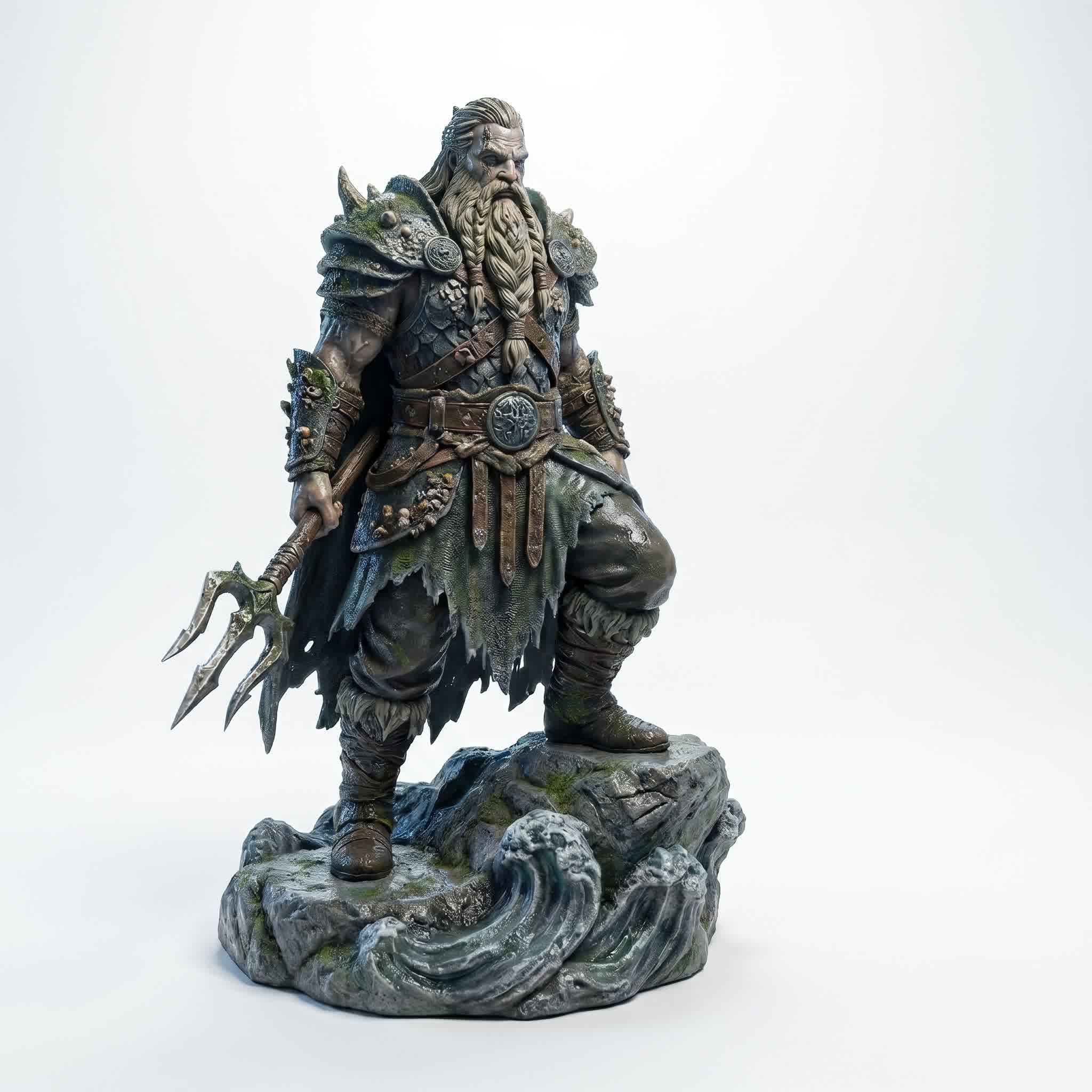
Tripo's image-to-3D pipeline turns standard product photos into production-ready 3D assets — no 3D scanner required.
Tripo's adoption across the industry has been explosive. Here's where it's making the biggest impact:
Indie Game Development
Solo developers and small teams are using Tripo as their primary asset pipeline. A single developer can now generate an entire game's worth of 3D assets — characters, props, environments, weapons — in days instead of months. The auto-rigging feature alone saves weeks of manual work for character animation.
E-Commerce at Scale
Online retailers are using Tripo's image-to-3D pipeline to generate product models from standard photographs. With multi-view input support and 4K PBR textures, the output is good enough for interactive product viewers, AR shopping experiences, and marketing materials.
3D Printing & Prototyping
The 2-million-polygon Ultra Mode is a game-changer for 3D printing. Models come with watertight geometry, clean surface detail, and proper scaling (the auto-sizing parameter sets real-world dimensions in meters). Industrial designers are using Tripo to go from concept to STL file in minutes.
Film & Cinematic Pre-Vis
Directors and VFX supervisors use Tripo's text-to-3D for rapid scene blocking, prop generation, and character stand-ins. The 2-second generation speed means they can iterate in real-time during creative meetings — "make the sword bigger, give it a gold hilt, add a blue glow" and see results instantly.
How to Get Started with Tripo 3D
Ready to try it? Here's how to jump in:
Tripo Studio (Web App)
The easiest way to get started. Visit tripo3d.ai and start generating from text prompts, images, or sketches. The Studio includes all the post-processing tools — texturing, stylization, mesh conversion — in a single browser interface. New users get free credits to explore the platform.
API Integration (For Developers)
Tripo's REST API supports every feature available in the Studio. The documentation is comprehensive, with SDK examples for Python, JavaScript, and Unity. Key API endpoints:
image_to_model— Generate 3D from images (H3.0 / H3.1)text_to_model— Generate 3D from text promptsgenerate_multiview_image— Create multi-view sets from single imagesconvert_model— Convert between formats (GLB, OBJ, FBX, USD)edit_multiview_image— Edit individual views in a multi-view set
Plugins & Integrations
Tripo offers native plugins for Unity, Unreal Engine, and Blender, letting you generate and import assets directly within your existing workflow. No context switching, no file management — just generate and use.
🎯 Pro workflow: Use P1.0 Smart Mesh for environment props and gameplay assets (2 sec each). Use H3.1 Ultra Mode for hero characters and key items (12 sec each). Apply auto-rigging and Magic Brush texturing for final polish. Total time for a complete game-ready asset set? Under an hour.
The Road Ahead: Tripo W1.0 and Beyond
Tripo isn't stopping at individual asset generation. The company has revealed Tripo W1.0, an early-stage world model initiative that aims to generate entire interactive 3D environments rather than individual objects. Think "generate a medieval village with ten buildings, roads, trees, and NPCs" as a single prompt.
The W1.0 research is focused on systems that can simulate and interact with dynamic spatial environments — not just generate static meshes but understand how objects relate to each other in space. This is the foundation for AI-driven level design, procedural world-building, and interactive storytelling.

Tripo's native 3D diffusion produces geometry with clean edge flow and sculpture-level precision.
Combined with the $50M funding runway and the rapid iteration cycle (the changelog shows updates every 2-4 weeks), Tripo is positioned to accelerate even faster in 2026 and beyond. The team is actively hiring researchers and engineers, suggesting that the best is yet to come.
The Verdict: A New Chapter in 3D Creation
Tripo 3D represents something genuinely rare in the AI space: a technology that's both faster and better than the competition, backed by serious investment and a clear product vision. The native 3D diffusion architecture is not just an incremental improvement — it's a fundamentally different approach that produces demonstrably better results.
For game developers, Tripo is the difference between spending 80% of your project time on asset creation and spending 80% of your time on gameplay, narrative, and polish. For e-commerce, it's the difference between $2000 product photography and a 5-second image-to-3D pipeline. For filmmakers, it's the difference between waiting days for pre-vis assets and generating them in a coffee break.
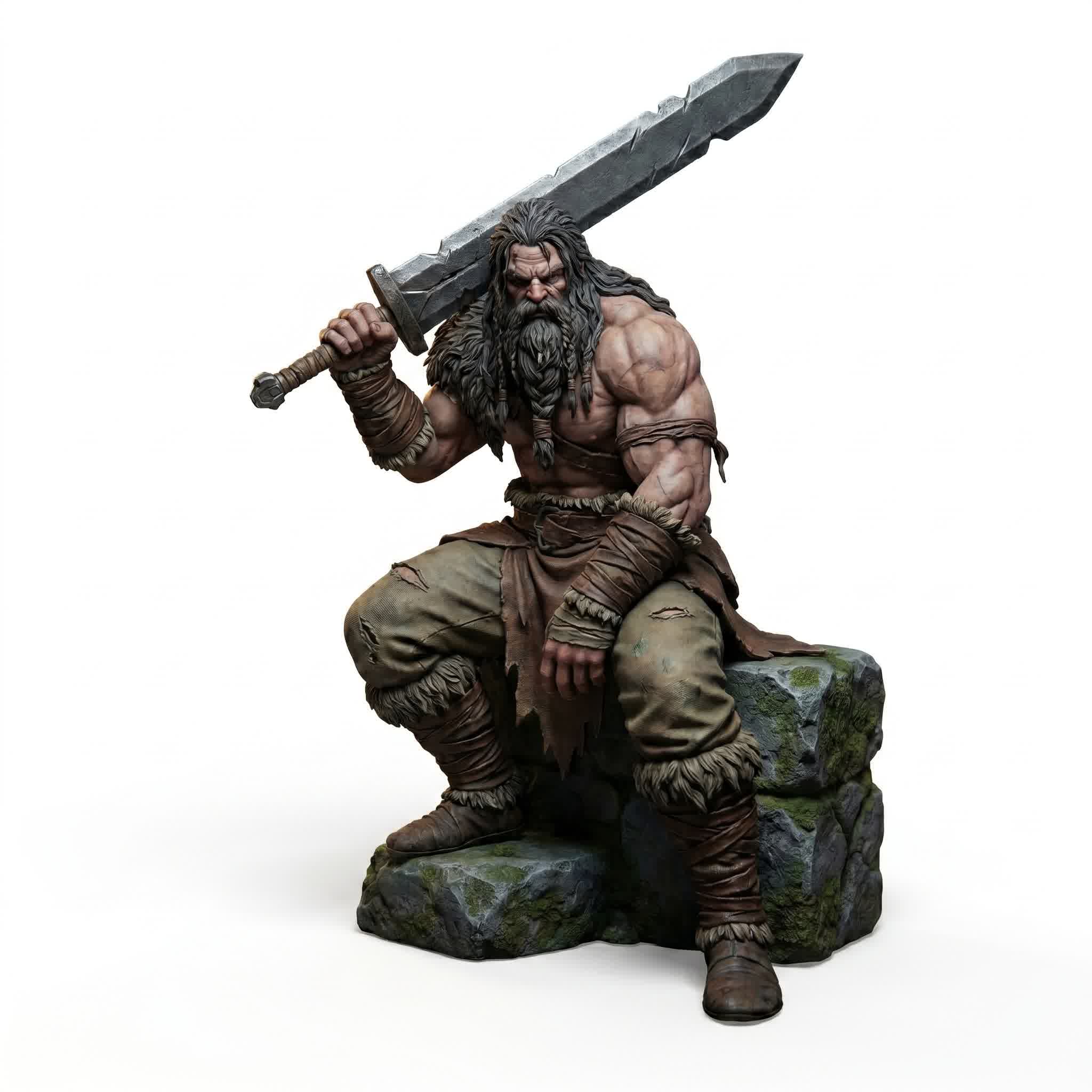
Clean topology and PBR materials make Tripo assets engine-ready from the moment they're generated.
None of this means traditional 3D artists are going extinct. What it means is that the definition of "3D artist" is expanding. The barrier to entry has collapsed. If you have a creative vision and can describe it clearly, you can now bring it to life in 3D — no years of technical training required.
The tools have changed. The game has changed. AI 3D 2.0 is here, and it runs on Tripo.
The age of AI sculpture isn't coming — it's already here. And it runs on Tripo.