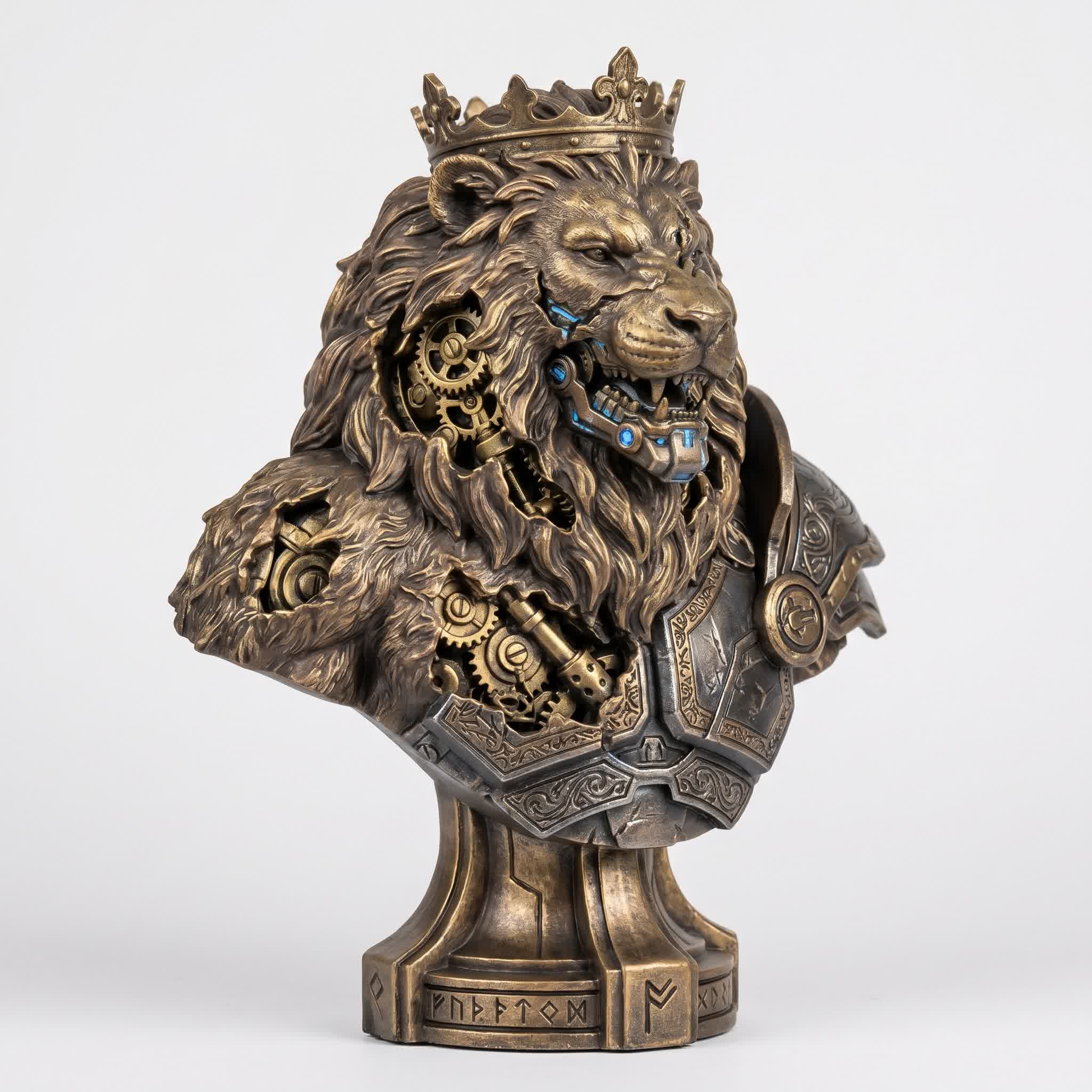
For decades, 3D modeling was a craft locked behind a steep wall. You needed years of training in Blender, Maya, or ZBrush. You needed to understand edge flow, UV mapping, topology, bake maps, and a dozen other concepts that could take years to internalize. The result was a world where only a fraction of creators could bring their 3D visions to life — and even then, it took hours or days per asset.
In 2026, that wall is crumbling. Hyper3D Rodin — the AI 3D model maker from Deemos Tech — is putting the power of a professional 3D studio into a web browser, accessible to anyone with a text prompt or a reference image. And with the recent launch of Rodin Gen 2.5, the platform is delivering sculpt-level detail, production control, and a toolset that's starting to rival traditional 3D software.
⚡ TL;DR: Hyper3D Rodin is an AI-powered 3D model generator that turns text and images into production-ready 3D assets. Features text-to-3D, image-to-3D, AI texturing, 3D editing, ControlNet, LoRA support, and a full API. Gen 2.5 brings "sculpt-level detail" and 8x faster generation. Available as a web app and API.
What Is Hyper3D Rodin?
Hyper3D Rodin is a generative AI platform for 3D asset creation developed by Deemos Tech, a Los Angeles-based company that's been quietly building some of the most impressive 3D AI technology on the planet. The platform lets you generate high-quality 3D models from:
- Text prompts — describe what you want in natural language
- Single images — upload a reference photo and get a 3D reconstruction
- Multi-view images — up to 5 images from different angles for higher accuracy
- Remix mode — combine an image with a text description for stylized results
What sets Rodin apart from other AI 3D generators is its focus on production-ready output. The models come with clean topology, proper UVs, and PBR (physically based rendering) materials out of the box. You don't need to spend hours cleaning up the mesh or re-baking textures — the asset is ready to drop into Unity, Unreal, Blender, or any standard 3D pipeline.
The Technology Behind Rodin
Rodin is built on a large-scale generative model with over 4 billion parameters (Gen 1.5). The architecture is designed from the ground up for native 3D generation — meaning it generates quadrilateral mesh geometry and PBR materials directly, rather than approximating 3D from 2D projections.
This matters because most AI 3D tools use image diffusion models adapted for 3D. They generate 2D views from multiple angles and then reconstruct a 3D mesh. The result is often messy topology, baked-in artifacts, and hours of cleanup. Rodin's native approach sidesteps this entirely, producing clean quad meshes with organized edge flow from the first generation.
🧠 Architecture highlights: Rodin integrates 3D ControlNet for spatial conditioning (bounding boxes, voxels, point clouds) and LoRA style modules for fine-tuned style control. The model outputs native quad meshes with automatic UV unwrapping and PBR material maps (albedo, roughness, metallic, normal).
Rodin Gen 2.5: The Big Leap
In May 2026, Deemos Tech launched Rodin Gen 2.5, the latest generation of their AI 3D model generator. The headline features are impressive:
Sculpt-Level Detail
Gen 2.5 delivers what the company calls "sculpt-level detail" — sharp edges, clean surfaces, and intricate geometry that rivals hand-sculpted assets in ZBrush. Embedded text, complex surface patterns, and fine structural details are rendered with clarity that was previously impossible from AI generation. The geometry quality has jumped significantly, making Rodin viable for hero assets and close-up shots.
8x Faster Generation
A new Speedy mode (Turbo Gen) delivers generation speeds up to 8x faster than previous versions. Standard generations that took 2-5 minutes now complete in seconds. For game developers and rapid prototyping workflows, this is a game-changer. You can iterate on a character design, adjust the prompt, and see a new result before you've finished your coffee.
Production Control
Gen 2.5 adds finer-grained control over the generation process. Advanced options let you dial in polygon counts (from 2,000 to 200,000 faces), texture quality levels, material types (PBR vs. shaded), and generation modes (Default, Focal, Turbo). This level of control is unprecedented for an AI 3D tool and brings it closer to professional software in terms of output predictability.
Rodin Gen 2: AI 3D Model Editing
One of the most exciting developments in the Rodin ecosystem is Gen 2 Edit — AI-powered 3D model editing that lets you modify existing models using natural language or reference images.
This is a huge deal. Most AI 3D generators are "one-shot" — you generate once, and if you don't like it, you start over. Rodin Gen 2 Edit changes that by allowing iterative refinement. Want to change your character's armor from plate to chainmail? Add horns to a creature? Change the material from wood to metal? You can describe the change, and Rodin applies it while preserving the rest of the model.
The edit pipeline works with both Rodin-generated models and imported meshes (OBJ, FBX, GLB). Combined with the Remix feature (which blends an image with a text description), this creates a genuinely iterative 3D workflow — generate, edit, refine, repeat — all within the browser.
The Full Rodin Toolbox
Hyper3D has built a surprisingly comprehensive ecosystem around the core generation engine. Here's what's available on the platform:
Text to 3D Model
Type a description, get a 3D model. The text-to-3D pipeline handles everything from simple objects ("a wooden chair with curved armrests") to complex characters ("a cyberpunk samurai with glowing blue armor and a katana"). The Gen 2.5 model has significantly improved prompt adherence and geometric accuracy.
Image to 3D
Upload a reference image — or up to 5 multi-view images — and Rodin reconstructs the subject as a fully textured 3D model. The concat mode treats multiple images as multi-view captures for photogrammetry-style reconstruction. The fuse mode combines features from multiple images into a single model — useful for design exploration and concept blending.
AI Texture Generator
Apply PBR materials to any existing mesh, whether it was generated by Rodin or imported from elsewhere. The texture generator produces albedo, roughness, metallic, and normal maps at high resolution. This is a huge time-saver for texturing props and environment assets.
AI Art & Image Generator
Rodin includes a 2D image generation capability for creating reference art, concept sketches, and texture sources. This integrates with the 3D pipeline — generate a 2D concept, then convert it to 3D in the same interface.
OmniCraft Suite
The OmniCraft tools extend Rodin's capabilities even further:
- Model Format Converter — convert between GLB, FBX, OBJ, USD, and STL
- HDRI Generation — create 8K panoramic HDRI environments
- Background Removal — automatic RGBA alpha channel handling
- Low-Poly Baking — bake normal maps from high-poly to low-poly models
API for Developers
The Rodin API allows developers to integrate generative 3D directly into their own applications, games, and workflows. This is the same engine that powers the web platform, exposed as a REST API with clear documentation and SDK examples. Key use cases include automated asset generation pipelines, in-game model creation, and e-commerce product visualization.
Rodin vs. Tripo vs. Hunyuan
With so many AI 3D tools emerging, it's natural to wonder how Rodin stacks up. Here's a comparison with the two other major players we've covered on this blog:
| Category | Hyper3D Rodin | Tripo 3D | Hunyuan 3D |
| Generation Speed | ~30-120 sec (Turbo: ~10-15 sec) | 2 sec (P1.0) | ~90 sec |
| Max Polygons | ~200,000 (API configurable) | 2M | 1.5M |
| Topology | Native quad mesh | Native 3D diffusion | Standard |
| 3D Editing | Yes (Gen 2 Edit) | Limited | Not available |
| ControlNet Support | Yes | Not available | Not available |
| LoRA Style Support | Yes | Style transfer only | Not available |
| Auto Rigging | Not available | Built-in | Not available |
| Open Source | No (Web + API) | No (API + Studio) | Yes (v2.1) |
| Best For | Iterative design, editing, texturing | Speed, rigging, game-ready | Open-source, self-hosting |
The key distinction: Tripo is fastest, Hunyuan is the only open-source option, but Rodin offers the most complete toolset — 3D editing, ControlNet, LoRA, texturing, and a robust API all in one platform. Each has a clear use case, and the smartest approach is to have all three in your toolkit.
Real-World Applications
Hyper3D Rodin is being adopted across a wide range of industries. Here's where it's making the biggest impact:
Game Development
Indie studios and solo developers are using Rodin as their primary 3D asset pipeline. The text-to-3D capability lets them iterate on character and prop designs rapidly, while the API enables automated asset generation at scale. The Gen 2 Edit feature is particularly valuable for game dev — being able to modify an existing asset instead of regenerating from scratch saves enormous time.
E-Commerce & Product Visualization
Online retailers are using Rodin's image-to-3D to create interactive product models from standard photography. Multi-view input support and PBR materials produce output that's good enough for 360-degree product viewers and AR shopping experiences. The recent addition of RGBA alpha channel support makes it easy to create product images with transparent backgrounds.
3D Printing & Rapid Prototyping
Rodin's STL export and watertight geometry make it a natural fit for 3D printing workflows. Industrial designers use the text-to-3D capability for rapid concept exploration and the image-to-3D pipeline for reverse-engineering existing parts. The polygon count controls let you balance detail against print time.
Education & Digital Art
For educators and students, Rodin removes the technical barriers to 3D creation. Instead of spending the first semester learning interface navigation, students can jump straight to creating. Digital artists use Rodin as a "sketching" tool — generating base meshes that they then refine in traditional software.
How to Get Started with Hyper3D Rodin
Getting started with Rodin is straightforward. Here's how:
Web App
Visit hyper3d.ai and create a free account. New users get a 7-day trial with credits to explore the platform. The web app supports text-to-3D, image-to-3D, Remix, Gen 2 Edit, and all the OmniCraft tools in a single browser interface. No installation required.
Subscription Plans
Rodin offers several tiers:
- Creator ($24/mo) — 30 credits/month, HD exports, web app access
- Business ($120/mo) — 208 credits/month, API access, higher quality tiers
- Education ($12/mo) — discounted pricing for students and educators
- Enterprise — custom pricing for studios and large teams
Credits refresh monthly and unused credits roll over within limits. The platform has a generous "redo" policy — if you don't like a generation, you can retry without spending credits.
API Integration
For developers, the Rodin API is available on Business and Enterprise plans. The REST API covers generation, editing, texturing, and format conversion. Documentation is available at developer.hyper3d.ai with SDK examples for Python, JavaScript, and Unity.
🎯 Pro workflow: Use the web app for initial concept exploration and design iteration. Export to GLB and refine in Blender or Unity. For production pipelines, use the API to automate generation and integrate with your existing asset management system. The OmniCraft format converter ensures compatibility with any engine.
The Road Ahead
Deemos Tech is pushing hard on several fronts. The rapid iteration from Gen 1.5 to Gen 2.5 in just over a year shows a team that's moving fast and shipping constantly. The integration of 3D ControlNet and LoRA support points toward a future where AI 3D generation is as controllable and customizable as AI image generation is today.
The company's focus on production-quality output is the right bet. As the novelty of "AI can make 3D models" wears off, what matters is whether those models are actually usable in professional pipelines. Rodin's native quad mesh output, PBR materials, and clean UVs make it one of the few AI 3D generators that genuinely delivers production-ready results.
The editing capabilities in Gen 2 are particularly promising. The ability to iteratively refine a model — rather than regenerating from scratch — bridges the gap between AI generation and traditional 3D modeling. Combined with style LoRAs and ControlNet, we're approaching a point where an AI 3D tool can replace significant portions of the traditional 3D pipeline.
The Verdict
Hyper3D Rodin is not the fastest AI 3D generator (that's still Tripo). It's not the most open (that's Hunyuan). But it is the most complete — the widest feature set, the most control over output, the most comprehensive tool ecosystem. If you need to go from idea to textured, production-ready 3D asset with full creative control, Rodin is the most compelling option available today.
The Gen 2.5 update with sculpt-level detail, 8x faster generation, and advanced production controls brings Rodin closer than ever to being a genuine alternative to traditional 3D software. For indie developers, e-commerce teams, educators, and anyone who needs 3D assets without the traditional learning curve, Rodin is worth a serious look.
Is it ready to replace Blender or Maya entirely? Not yet — not for complex, bespoke work. But for the 80% of 3D asset creation that follows established patterns and doesn't require hand-sculpted originality, Rodin is already faster, easier, and in many cases better than the manual alternative.
And with the pace of development Deemos Tech has shown, that remaining 20% is looking increasingly vulnerable.
AI 3D generation has reached a turning point. Rodin isn't just making 3D easier — it's redefining who gets to be a 3D artist.